
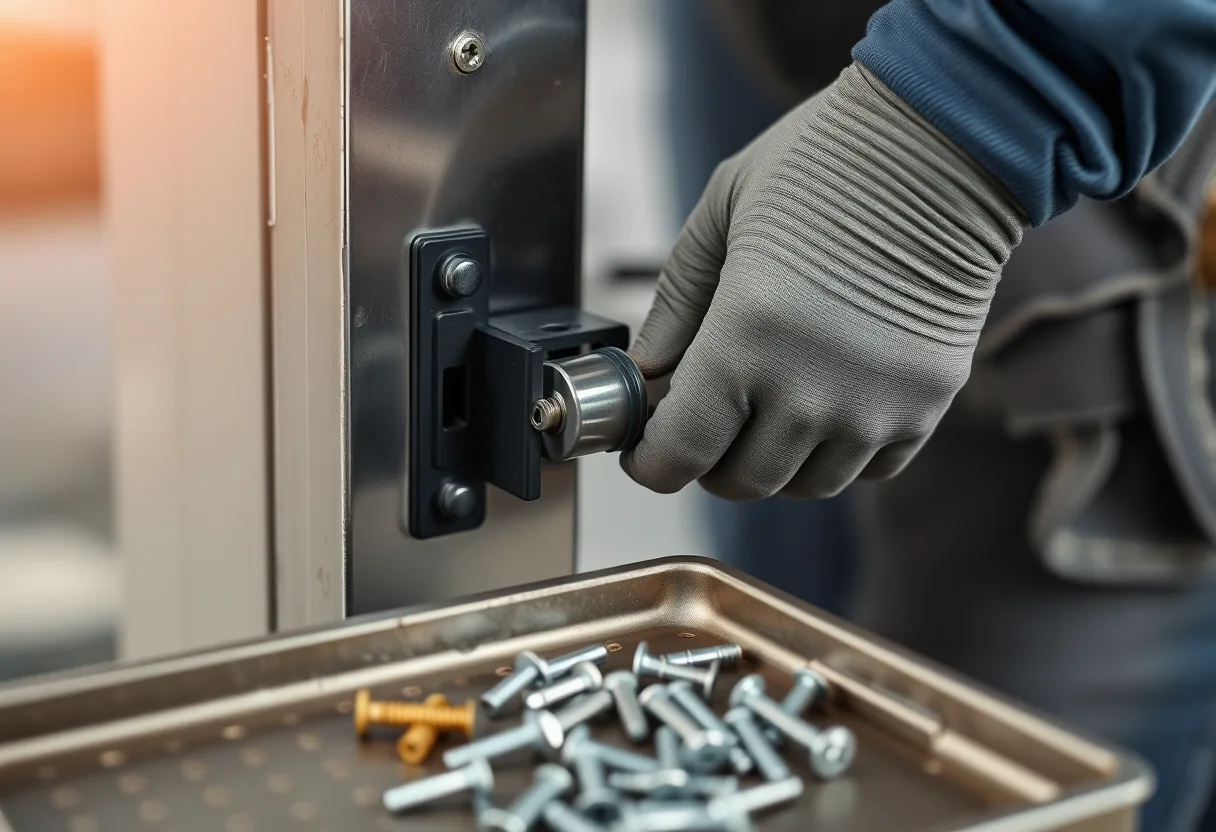
Push Bar Repair in Torrance, CA
Push bar not latching, stuck, dogged open, or hanging loose — fast repair and replacement of panic and exit hardware. Local technicians, free estimates, and same-day response in Torrance.
An entrance either controls access or it merely suggests it. That's exactly the work Access Controls LA does: professional push bar repair in Torrance, engineered for the property in front of us rather than copied from the last job. If you'd rather talk than read, (888) 897-8860 reaches our dispatch desk from early morning until late evening.
Push Bar Repair for Torrance Properties
No two service areas are alike, and Torrance proves it. Torrance's industrial corridors run on shift schedules and vendor traffic, so access control there is as much about time windows and vehicle gates as it is about doors.
In Torrance's medical buildings, access control is compliance infrastructure: who entered the records room, when, and under whose credential.
Torrance's retail strips lean on buzz-in entries, back-door delivery control, and stockroom credentials — small systems that pay for themselves in reduced shrinkage.
Beyond the property mix, geography shapes the work: Torrance sits within South Bay, which means our crews are already routed through the area daily — there's no 'trip charge' territory in Los Angeles County, and no learning curve about local building stock.
The Standards Behind Our Push Bar Repair
A few non-negotiables define how we work, whatever the size of the job. Done properly, dogging mechanisms (the hex or key feature that holds the latch retracted) wear out and are rebuildable on quality hardware. As standard practice, a bar that won't latch usually traces to strike misalignment, a sagging door, or worn latch springs — all fixable without replacing the device. Done properly, when a device is obsolete or bent, we replace it with a listed equivalent the same day rather than leave an exit compromised.
As standard practice, vertical-rod devices fail at the top and bottom latches first; rod adjustment and fresh guides restore them more often than not. On every job, every repair ends with a function test: one-motion exit, positive latch, and alarm or electrification verified live.
What Usually Prompts the Call
The calls we get about this tend to rhyme. A few of the most common:
- Panic bar stuck down or dogged open permanently.
- Push bar rattles but the door won't latch shut.
- Vertical rods out of adjustment on a pair of doors.
- Exit alarm chirping or dead after a battery change.
We've resolved each of these situations more times than we can count, and the diagnosis is usually quicker than the customer expects.
Built for These Environments
We've installed this for just about every property type, though a few come up constantly — retail stores, medical buildings, schools, restaurants, among others.
Each environment changes the spec — mounting heights, weather exposure, door materials, traffic volume — which is exactly why we survey before we quote. Where the public touches the hardware, vandal resistance moves from option to requirement — sealed keypads, tamper switches, and fasteners that need more than a pocket screwdriver.
How to Think About the Equipment
Spec sheets won't tell you what matters here, because what matters is how your property operates at 7am on a Monday. A four-unit building, a 40-suite office, and a 400-resident tower can all be 'access control' and share almost no hardware in common. Our job in the design phase is translating those realities into equipment — and being accountable for the translation years later.
Most premature failures we're called to fix trace to one of three sins — undersized power, unsealed exterior hardware, or wiring that was never labeled. We favor equipment with a long parts tail and an open ecosystem, because the cheapest proprietary system becomes the most expensive one the day its manufacturer loses interest. And think in phases — a system designed with spare panel capacity and standard wiring can add doors, upgrade credentials, and bolt on integrations later without starting over.
Our Process, Step by Step
1. Site Survey & Assessment
Everything starts with eyes on the property. We check each opening's construction, trace what wiring already exists, verify power and network availability, and flag code considerations like egress requirements before anyone talks hardware. You get honest answers on site — including, sometimes, that you need less than you expected.
2. Scope, Spec, and Price
We design the system around how the property actually operates: who needs access, when, and through which doors. The proposal names exact hardware — not 'reader, qty 4' but the specific model and why. Options are priced as options, so good-better-best is your decision, made with real numbers.
3. Installation
On install day, the crew arrives with everything staged — hardware, brackets, cable, and the fasteners that match your door and frame materials. Doors stay operational as we work; a building is never left unsecured overnight. Wire runs are concealed where possible, protected where not, and labeled at both ends.
4. Setup, Testing, and Handoff
Commissioning means testing every door the hard way: real credentials at the reader, lock engagement under load, request-to-exit timing, door position reporting, and alarm events confirmed end to end. Then we train your people — enrolling and revoking credentials, changing schedules, running reports — until they're comfortable driving the system themselves.
5. What Happens After We Leave
After the install, you have a direct line — (888) 897-8860 — to people who have your door schedule and as-builts on file, which turns most service calls into fast, surgical visits. Batteries, firmware, and credential audits can run on a schedule if you'd rather never think about the system at all.
The Case for Calling Us First
There's no shortage of companies that will sell you hardware. Here's what you actually hire when you call us:
- Fixed quotes that hold. The number we put in writing is the number on the invoice unless you change the scope.
- One accountable team. Survey, quote, install, program, and support come from the same company — no finger-pointing between a salesman, a sub, and a help desk.
- Repairs before replacements. If your existing system can be fixed economically, that's what we'll tell you — a reputation outlasts any single invoice.
- Documentation left behind. Labeled wiring, panel maps, and credentials records stay with the property — you're never hostage to whoever installed the system.
- Local and present. We're based at 6100 Sepulveda Blvd in Van Nuys and work South Bay daily — when something fails, the technician isn't driving in from another county.
We keep longer hours than nearly anyone in the trade: Sunday through Thursday 6:30am to 11:30pm and Friday 6:30am to 4pm. A door that fails at 9pm on a Tuesday doesn't wait for the next business day.
Cost Factors, Explained Plainly
Pricing for push bar repair in Torrance isn't a mystery — it's arithmetic driven by a handful of site factors.
- Software and licensing, which ranges from none (standalone) to per-door cloud subscriptions.
- Door and frame construction — glass, aluminum storefront, hollow metal, and wood each take different locking hardware.
- Wiring distance and pathway difficulty between doors, panels, and power.
- Site conditions like occupied spaces, after-hours work windows, lifts for high mounting, or trenching at gates.
- Whether existing cabling and hardware can be reused after testing.
The honest path is a short site visit, after which the quote is fixed and itemized. If a cheaper configuration would serve you fine, the quote will say so.
However You Searched, This Is the Page
Whether you searched from Torrance or anywhere in South Bay, these phrases all describe the work on this page:
- Panic bar won't latch (Torrance, CA)
- Push bar repair near me
- Exit door not closing near me
- Panic bar dogging repair near me
- Replace crash bar (Torrance, CA)
- Push bar repair
- Crash bar repair
- Panic bar repair — South Bay
Search engines treat those as different queries; our dispatch board treats them as Tuesday. One call to (888) 897-8860 covers every version of the problem.
From Phone Call to Fixed Door
When you dial (888) 897-8860, you're talking to the same local operation that will send the technician — no national call center, no lead reselling. Describe what you're seeing in plain terms — 'the buzzer rings but the door won't open,' 'we need fobs for a new office,' 'the gate keypad died' — and we'll usually identify the likely cause and the fix on the spot.
No pressure tactics, no 'today-only' pricing — just a diagnosis, a number in writing, and a schedule that respects yours.
Also Serving the Area Around Torrance
Torrance is one stop on routes that also take us through Carson, El Segundo, Gardena, Hawthorne, Hermosa Beach, Inglewood — same technicians, same response standards, county-wide.
Push Bar Repair in Torrance — FAQs
Is the site survey really free?
What ongoing support is available?
How fast can you get to Torrance for push bar repair?
Are you licensed and insured?
What happens to the system when power fails?
Are you tied to one manufacturer?
Is my aging system worth fixing?
Can parts of my old system be kept?
My original installer disappeared — can you take over?
How disruptive is the install?
Push Bar Repair in Nearby Cities
More Services in Torrance
- Magnetic Lock Installation Torrance
- Magnetic Lock Repair Torrance
- Magnetic Lock Replacement Torrance
- Electric Strike Installation Torrance
- Electrified Door Hardware Torrance
- Push Bar Installation Torrance
- Access Control Installation Torrance
- Commercial Access Control Torrance
- Key Card Entry Systems Torrance
- Key Fob Entry Systems Torrance
- Keypad Entry Systems Torrance
- Mobile Access Control Torrance
Push Bar Repair in Torrance — Handled
Call (888) 897-8860 for a free on-site estimate anywhere in Torrance.