
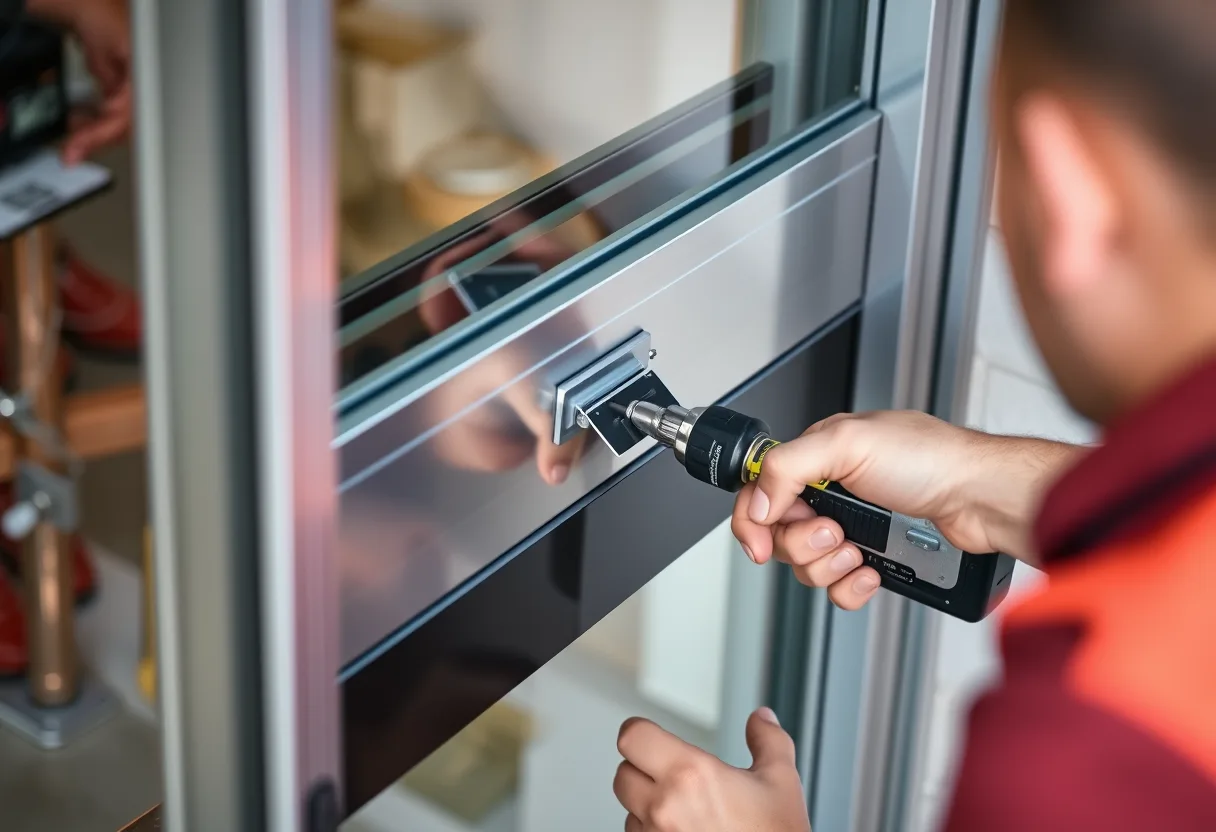
Card Reader Installation in Downtown Los Angeles, CA
Card, fob, and mobile-ready readers installed on doors, gates, elevators, and turnstiles. Local technicians, free estimates, and same-day response in Downtown Los Angeles.
Good access control is invisible when it works and painfully obvious when it doesn't. At Access Controls LA, card reader installation in Downtown Los Angeles isn't a side offering — it's the core of what our technicians train on, stock parts for, and stand behind. Reach us at (888) 897-8860 seven days a week during business hours; most estimates are scheduled within a day.
Card Reader Installation for Downtown Los Angeles Properties
Working across Downtown Los Angeles has taught us what the local building stock actually demands. Plenty of Downtown Los Angeles's building stock predates modern low-voltage wiring, so our installs there lean on retrofit-friendly systems that respect original doors and frames while still meeting today's codes.
The office suites and commercial corridors in Downtown Los Angeles run on tenant turnover, after-hours cleaning crews, and vendors who all need different levels of access — exactly the problem electronic credentials were built to solve.
The denser blocks of Downtown Los Angeles mean mixed-use buildings, shared lobbies, and parking structures — systems here coordinate several entry types under one credential database.
Beyond the property mix, geography shapes the work: Downtown Los Angeles sits within Central Los Angeles, which means our crews are already routed through the area daily — there's no 'trip charge' territory in Los Angeles County, and no learning curve about local building stock.
How Card Reader Installation Is Done Right
Anyone can mount a reader. The craft is in everything you can't see once the cover goes on. We make sure readers at gates and exteriors get sealed backs, gaskets, and UV-stable housings. As standard practice, mullion, single-gang, and keypad-combo readers are matched to the door frame and aesthetic.
Experience shows up in details like this: multi-technology readers bridge old credentials and new during migrations. Done properly, mounting height and angle follow ADA reach requirements at every opening.
What Usually Prompts the Call
The calls we get about this tend to rhyme. A few of the most common:
- Sun-baked readers with dead keypads.
- Readers skimmable at the wire.
- Mixed credential formats across one building.
- A reader that reads only on the third try.
We've resolved each of these situations more times than we can count, and the diagnosis is usually quicker than the customer expects.
Common Applications
We've installed this for just about every property type, though a few come up constantly — gates, office doors, garages, storefronts, among others.
The property dictates the hardware, never the other way around; what we install at an office entry is not what we bolt to a yard gate. High-traffic entries also justify monitored hardware that reports its own health, so a weakening lock gets replaced on a schedule instead of failing at 8am.
Choosing the Right Technology
Spec sheets won't tell you what matters here, because what matters is how your property operates at 7am on a Monday. The right system for a property is the one its least technical daily user can operate and its busiest manager can administer without a support ticket. When the technology fits the property, the system disappears into the routine; when it doesn't, it becomes everyone's least favorite coworker.
Most premature failures we're called to fix trace to one of three sins — undersized power, unsealed exterior hardware, or wiring that was never labeled. We favor equipment with a long parts tail and an open ecosystem, because the cheapest proprietary system becomes the most expensive one the day its manufacturer loses interest. One more lens worth applying: total cost over ten years, not the install invoice. Licensing, batteries, credential replacement, and service availability dwarf small hardware price differences over a system's life.
How the Work Unfolds
1. Walkthrough and Survey
First visit is diagnostic, not sales. We inspect the doors and gates in question, test any existing equipment worth saving, and map cable paths and panel locations. By the end of the walkthrough you'll know the realistic options, roughly what each costs, and which one we'd choose if it were our building.
2. System Design and Quote
You receive a written scope with specific hardware models, labor, and programming — one number, no allowances that balloon later. We explain why each component was chosen and what the alternatives would save or cost. The quote holds unless the scope changes, and you'll never learn about an exclusion after the deposit.
3. Installation
On install day, the crew arrives with everything staged — hardware, brackets, cable, and the fasteners that match your door and frame materials. Doors stay operational as we work; a building is never left unsecured overnight. Wire runs are concealed where possible, protected where not, and labeled at both ends.
4. Programming & Commissioning
Commissioning means testing every door the hard way: real credentials at the reader, lock engagement under load, request-to-exit timing, door position reporting, and alarm events confirmed end to end. Then we train your people — enrolling and revoking credentials, changing schedules, running reports — until they're comfortable driving the system themselves.
5. What Happens After We Leave
After the install, you have a direct line — (888) 897-8860 — to people who have your door schedule and as-builts on file, which turns most service calls into fast, surgical visits. Batteries, firmware, and credential audits can run on a schedule if you'd rather never think about the system at all.
What Makes Us Different
What you can hold us to:
- Documentation left behind. Labeled wiring, panel maps, and credentials records stay with the property — you're never hostage to whoever installed the system.
- Fixed quotes that hold. The number we put in writing is the number on the invoice unless you change the scope.
- Clean work, occupied buildings. Our crews are used to working around tenants, patients, and customers without turning your lobby into a construction site.
- Code-first installs. Egress, fire alarm tie-ins, and ADA requirements are engineered into every quote — never discovered by an inspector afterward.
- Brand-agnostic advice. We install and service the major platforms, so the recommendation fits your building rather than a dealer quota.
Our schedule is built around the reality that entries fail at inconvenient times — reach us Sunday–Thursday from 6:30am to 11:30pm, and Fridays until 4pm.
What It Costs — Honestly
Pricing for card reader installation in Downtown Los Angeles isn't a mystery — it's arithmetic driven by a handful of site factors.
- The number of openings being controlled, since each door or gate carries its own hardware and labor.
- Door and frame construction — glass, aluminum storefront, hollow metal, and wood each take different locking hardware.
- Software and licensing, which ranges from none (standalone) to per-door cloud subscriptions.
- Wiring distance and pathway difficulty between doors, panels, and power.
- The credential technology chosen, from basic keypads to encrypted cards to mobile.
A survey pins all of this down and produces a fixed quote — typically within a day of the visit. The assessment costs nothing and obligates you to nothing.
However You Searched, This Is the Page
Property owners describe this need in wildly different words. These searches all land on the same answer:
- Door card reader installation in Downtown Los Angeles
- Card reader installation near me — Central Los Angeles
- HID card reader repair in Downtown Los Angeles
- HID reader installation — Central Los Angeles
- Card reader installation (Downtown Los Angeles, CA)
- HID reader installation
- HID Signo reader installer
- HID card reader repair (Downtown Los Angeles, CA)
Search engines treat those as different queries; our dispatch board treats them as Tuesday. One call to (888) 897-8860 covers every version of the problem.
What Happens When You Call
The call to (888) 897-8860 is shorter than you expect: what's the property, what's the door or gate doing, and when can we look at it. If it's urgent — a door that won't lock, a gate stuck open — say so, and dispatch treats it as the same-day problem it is.
No pressure tactics, no 'today-only' pricing — just a diagnosis, a number in writing, and a schedule that respects yours.
Beyond Downtown Los Angeles
If your property sits outside Downtown Los Angeles proper, you're still covered: we regularly serve Los Angeles, West Hollywood, Baldwin Hills, Chinatown, Crenshaw, East Hollywood, and the rest of Central Los Angeles.
Card Reader Installation in Downtown Los Angeles — FAQs
Is the site survey really free?
My original installer disappeared — can you take over?
Do you offer maintenance plans?
Are you tied to one manufacturer?
Are you licensed and insured?
What areas do you serve?
My system is old — repair or replace?
How does scheduling work?
Do maglocks and controlled doors meet code?
Will the doors still work during a power outage?
Card Reader Installation in Nearby Cities
More Services in Downtown Los Angeles
- Access Control Repair Downtown Los Angeles
- Access Control Maintenance Downtown Los Angeles
- Access Control Upgrades Downtown Los Angeles
- Access Control Wiring Downtown Los Angeles
- Access Control Panel Installation Downtown Los Angeles
- Access Control Programming Downtown Los Angeles
- Elevator Access Control Downtown Los Angeles
- Turnstile Installation Downtown Los Angeles
- Access Control & Camera Integration Downtown Los Angeles
- Visitor Management Systems Downtown Los Angeles
- Access Control Installation Downtown Los Angeles
- Commercial Access Control Downtown Los Angeles
Card Reader Installation in Downtown Los Angeles — Handled
Call (888) 897-8860 for a free on-site estimate anywhere in Downtown Los Angeles.